
Diversity & Differences: Embracing Conflict

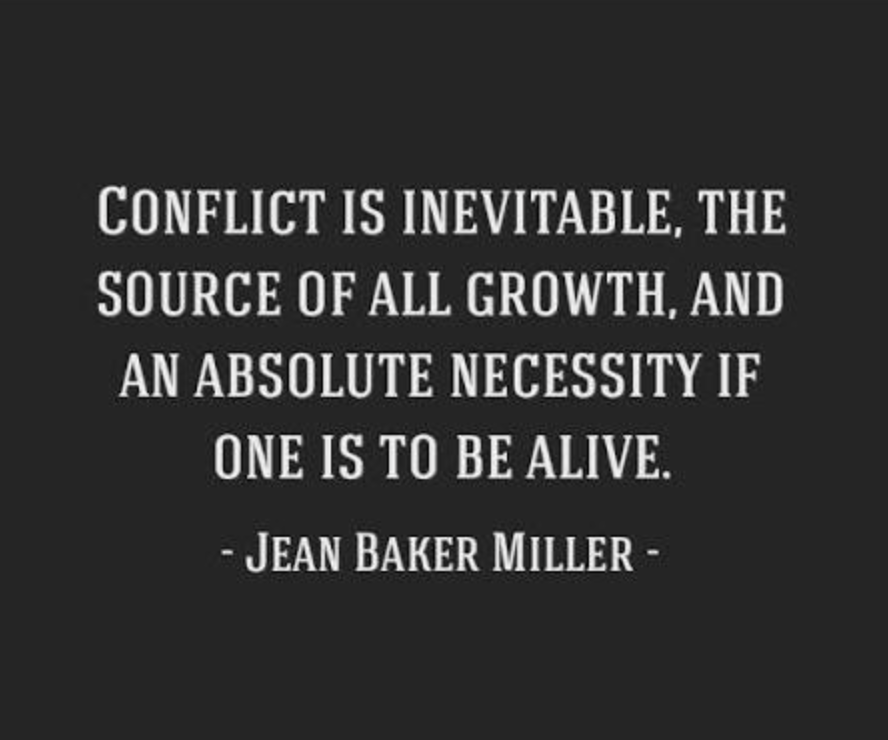
Conflict is a theme that is prevalent throughout every human being’s life, whether it be with a significant other, parent, sibling, coworker, or even a random person on the street. Some conflicts are seemingly insignificant in the grand scheme of things, while others have the potential to alter the course of a person’s relationship, career, or even life. The biggest factor in the impact any conflict has is how it is handled. According to Nikitara et al. (2024), “effective conflict resolution is closely linked to collaboration and communication” (p. 4182). Ultimately, effective conflict management depends on how well the involved parties work together and engage in respectful discourse. Before anyone can become effective in the art of conflict management, however, they must first understand themselves. They must understand how their past experiences have shaped how they respond to conflict. With that, I’ve recently taken the time to reflect on my own past experiences and study how I tend to handle conflict in light of those experiences. Reflecting on and studying these things has helped me to better understand where my current strengths lie in conflict management. More importantly, though, it has helped me to identify the aspects of conflict management that I can improve upon to ultimately grow as not only a healthcare leader, but as a human being.
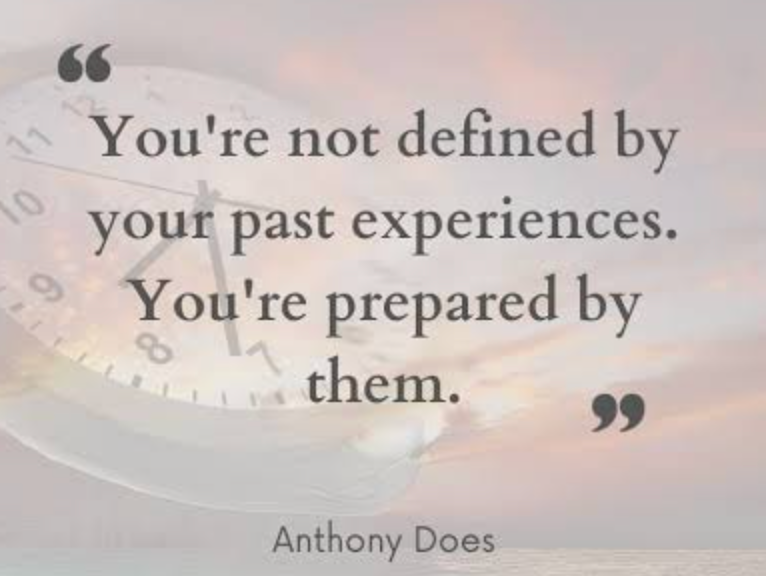
To understand how I currently approach conflict, I first stopped to reflect on how my past experiences have shaped me. Although not nearly to the degree of CrisMarie Campbell’s father, I grew up with a hot-headed screamer for a dad. Whenever I attempted to voice my feelings or disagree with him, I would often get yelled at. I was made to believe that I was doing, thinking, or saying something wrong. Eventually, I learned to shy away from voicing my concerns, feelings, and opinions out of fear that I would be screamed at, guilt-tripped, or given the silent treatment. CrisMarie explained it perfectly when she remarked “we all have our own personal triggers. Mine is anybody getting upset in the environment, and I get really anxious. My body floods with fear and I want to run” (TEDx Talks, 2015, 9:07). Experiencing my dad getting angry over and over again instilled a trigger in me–a trigger that causes me to feel very uneasy whenever someone around me gets upset. If I were to have taken the conflict-management style assessment back then, I think I would’ve been classified as an Avoidant Turtle. I got to a point where my sole goal was to avoid any and all conflict so as not to risk making anyone angry. Now that I’m older and have had the time to reflect on those past experiences, I’ve since embarked on the journey of learning or, rather, unlearning, some of those tendencies that became so ingrained in me growing up. I’ve had to identify why I respond the way that I do to certain things: Why do I tend to shut down when someone’s yelling at me? Why do I tend to be a people-pleaser? Although I still have a lot of growing to do, taking the time to reflect on how those past experiences have shaped me has helped me to become the more self-aware leader and person that I am today, and has also aided me in identifying how I currently approach conflict.
To explore how I currently approach conflict, I completed the animal-based Conflict Style Inventory. Albert and Pappas (2025) noted that “managing conflict is the vehicle through which we negotiate our differences and work to find passage to common ground” (p. 201). In my case, the assessment identified three “vehicles” that I tend to use when managing conflict: the Collaborative Owl, Compromising Fox, and Accommodating Teddy Bear. These results were interesting to me for two reasons. First, the owl and fox just so happen to be my two favorite animals! The second, and more pertinent reason for today’s discussion, is that I didn’t end up having just one style that stood out; instead, I’ve got three equally dominant styles with which I tend to handle conflict. As the owl, I approach conflict by working with each member of my team. Resolving any conflict is a joint effort. As the fox, my focus is on finding a middle ground. I win something and lose something, just as every other member of the conflict does. As the teddy bear, I deeply value my relationships with people and I don’t want to risk damaging those relationships by pushing my goals or ideas onto them. Ultimately, I think these results speak to my adaptability as a leader. Just as I’m able to change my style of leadership to fit a wide variety of circumstances, it appears I’m also able to adapt my conflict-management style based on what would be most appropriate for any given situation. While I take great pride in this, I also recognize that I am far from perfect, and reflecting on where I’ve been and where I currently am in the realm of conflict management will aid me in my endeavors to improve the way in which I handle conflict in the future.
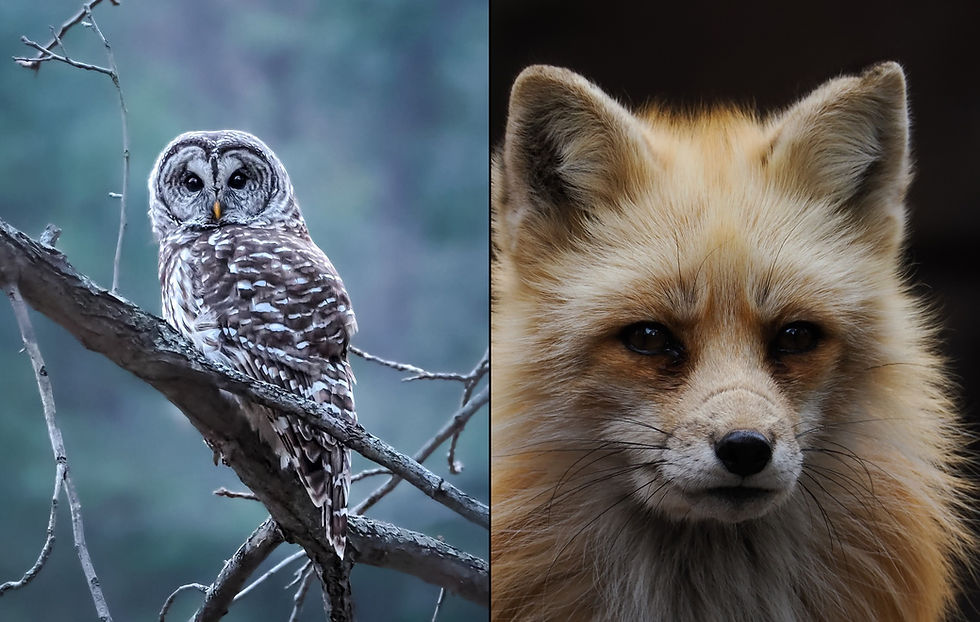
Note: Images were taken by the author of this blog
Having explored where I have been and where I am now, it’s time to consider where I hope to go as I work to refine my conflict-management skills. The primary skill related to conflict management that I hope to improve upon moving forward is assertiveness. While I can be assertive once in a while, I find that I often neglect to share what I want or need. This tendency of mine is likely still stemming from my time growing up when I retreated into my shell, shying away from sharing my thoughts with the world. Going forward, I will make an intentional effort to consistently share my concerns and needs, while remaining respectful of the needs and opinions of the people around me. Ultimately, developing this skill of assertiveness will help me to approach conflict and difficult conversations with greater confidence.
To strengthen my assertiveness and conflict-management skills in general, I recognize that I will need to employ a couple strategies and ideas that will aid me in approaching the many difficult conversations that lie ahead of me in my journey as a healthcare leader. Kwame Christian’s idea of compassionate curiosity reminds me that I do not need to have all the answers when I enter these conversations. Instead,
Compassionate curiosity will be [my] north star. [I] can look to it for guidance when [I] don’t know what to say, [I] can lean on it for support in [my] most difficult conversations, and as [I] start to build this new habit, [I] will realize that it actually takes pressure off of [me] because [my] goal is to learn not to teach. (TEDx Talks, 2017, 6:45)
Moving forward, I will approach every difficult conversation with the goal of asking questions, listening intently, and learning from the people I’m speaking with. Building on this idea, Sinek (2023) outlined a step-by-step process known as FBI that I can use to help me navigate these conversations. In the process, “F” represents my feelings regarding the person’s behavior. “B” represents the person’s behavior that made me feel a certain way. “I” represents the impact that could be had on my relationship with the person if their behavior doesn’t change. As an example, if I feel that a member of my team repeatedly dismisses my ideas, I could address them and say "I feel unheard when you consistently dismiss my concerns or ideas. If it doesn't stop, I worry that it could have a negative impact on our working relationship moving forward." All in all, as a healthcare leader, implementing these strategies will help me to transform difficult conversations and conflicts into opportunities for growth and strengthened relationships within my healthcare team.

Note: Image was generated via AI
The ability to transform conflict into a source of growth connects well to one of the ten complexity principles for healthcare leaders in today’s world: diversity is essential to life. Hospitals are complex systems composed of interconnected individuals and departments. Because each part of a hospital influences the system as a whole, any conflict that arises in one area has the capacity to affect all the other parts of the system. Albert and Pappas (2025) remarked that the presence or absence of conflict indicates whether or not a system is thriving. Conflict is natural within complex healthcare systems because the people who keep them functioning bring diverse experiences, perspectives, and opinions. When approached with care and respect, the conflicts that arise in the midst of this diversity can help to identify barriers and create positive change. Essentially, without conflict, there would be no progress. As a healthcare leader, my responsibility is to foster an environment where conflict is viewed as a necessary element of growth. By role modeling compassionate curiosity and the FBI process for my team, I can help turn conflict into an opportunity for learning and vulnerability–a chance to create positive change throughout our hospital.
Reflecting on my past experiences, as well as where I am now and where I hope to go, has helped me recognize that the ability to effectively manage conflict starts with self-awareness. While my past experiences taught me to avoid conflict, I have since come to understand that conflict is necessary. Conflict is what paves the way for growth and positive change. Going forward, I will strengthen my skill of assertiveness while maintaining my empathetic qualities by making a conscious effort to practice compassionate curiosity and the FBI process. By practicing these things, I will become better equipped to approach conflict and difficult conversations with greater confidence while always remaining respectful of opposing ideas. Ultimately, as I continue to develop as a healthcare leader, my desire is to create an environment in which diverse perspectives are valued and conflict is viewed as an essential component of growth and progress.

References
Albert, N. M., & Pappas, S. (2025). Quantum leadership: Creating sustainable value in health care (7th ed.). Jones & Bartlett Learning.
Nikitara, M., Dimalibot, M. R., Latzourakis, E., & Constantinou, C. S. (2024). Conflict management in nursing: Analyzing styles, strategies, and influencing factors: A systematic review. Nursing Reports, 14(4), 4173-4192. https://doi.org/10.3390/nursrep14040304
Sinek, S. (2023, July 10). Try this the next time you have an uncomfortable conversation / Simon Sinek [Video]. YouTube. https://www.youtube.com/watch?v=RcGkHrPSzDc
TEDx Talks. (2015, July 13). Conflict - use it, don't defuse it / CrisMarie Campbell & Susan Clarke / TEDxWhitefish [Video]. YouTube. https://www.youtube.com/watch?v=o97fVGTjE4w
TEDx Talks. (2017, December 11). Finding confidence in conflict / Kwame Christian / TEDxDayton [Video]. YouTube. https://www.youtube.com/watch?v=F6Zg65eK9XU


Comments