
Week One: Understanding My Why

Updated: Aug 18
When I was growing up, I never felt a true calling toward any particular profession. My mom and grandma were both nurses, but I never felt that nursing would be a good fit for me. Going into college, I continued to struggle with what I wanted my future to look like. Then, halfway through my freshman year in college, my mom was diagnosed with breast cancer. For three years I watched her go through chemotherapy, radiation, and countless surgeries. Through it all, I struggled to understand why. Why was my mom, one of the greatest people I’ve ever known, plagued with such a miserable disease? Through experiences such as this, what I've come to learn is that continually asking the question "why" and searching for the answer is foundational to the human experience. By my senior year in college, my mom was declared cancer-free. Through watching nurses care for her, nursing suddenly become something that I could see myself doing. I felt a yearning to provide people with the same compassionate, person-centered care that my mom was given. With that, I enrolled in an accelerated BSN program and 16 months later, I was a nurse. Now, 4.5 years later, I’m an emergency department charge nurse aspiring to be a nurse manager. I have finally found my “why”. The journey has been far from linear. It’s been full of ups, downs, backtracks, and even a few zig zags. Through it all, what I’ve come to understand is that the path forward in life, just as in healthcare leadership, isn’t meant to be a linear one; it’s one that’s fluid and ever-changing. As I venture even deeper into the realm of healthcare leadership, I will keep three things at the forefront of my mind: The journey won’t be linear, change will be a constant, and I must never lose sight of my "why."

So, on to my “why" as a healthcare leader. A few months ago, one of my team members said to me, “You know, Em, you make me feel like I don’t hate my job when you’re in charge." That was one of the best compliments I had received in a long time and it ties directly into why I want to continue growing in my journey as a healthcare leader. I want to be in a position that allows me to help the frontline members of my healthcare team feel valued and to help them develop a sense of belonging at work. My goal is to help steer healthcare away from the traditional view in which “the worker was mostly considered a subset of the work” (Albert & Pappas, 2025, p. 3) and toward the more current view in which “it is not the organization but the worker who owns the work” (Albert & Pappas, 2025, p. 3). What it all boils down to is that I want to be in a position where I can empower the frontline healthcare staff to be stewards of their work and to feel like they are more than machines that are being used to run a factory. As I reflect on my “why” and the compliment I received from my team member, I’ve come to realize that my leadership is grounded in three qualities that are unique to me and will guide my continued growth as a healthcare leader.
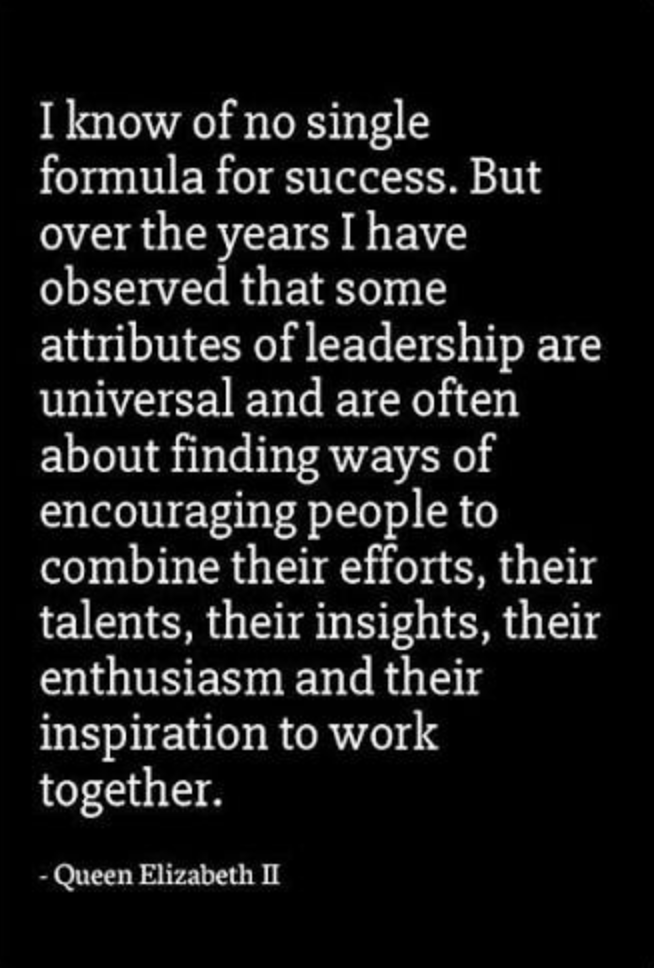
First, I strive to make each and every one of my team members feel like they matter. I’ve been around a lot of different leaders in my life and, in my experience, the best ones take the time to recognize people on a personal level, rather than just as numbers on a board. With that in mind, I make a conscious effort to check in on the members of my team regularly, both professionally and personally. The emergency department is a difficult environment to work in, even more so when people are dealing with challenging things in their personal lives. My goal is to make sure my team members know that I support them and truly care about them.
Second, I’m the type of leader who is able to change the way in which I lead based on different situations. This fits in well with the Situational Leadership Model. As explained by, Zigarelli (2013), "this leadership model argues that there's no one size fits all. Certain traits, skills, and styles fit better in one situation than another" (2:00). Some situations call for me to be controlling, such as when I need to direct my team in the event of a mass casualty incident. Other situations call for me to take more of a democratic approach, such as when I ask for my team’s input on ways we could increase the medication scanning rate in the department. Sometimes I need to take more of a hands-off leadership approach, such as when there’s a new nurse who needs to be pushed out of their comfort zone towards the end of their orientation. These are just a few examples. I believe an important trait of a leader is the ability to change how they lead in response to any given situation.
Third, I am the type of leader that remains calm in the face of chaos. The emergency department is in a constant state of what I like to call controlled chaos, and the way a leader responds to that chaos has a major impact on how the rest of the team responds. According to Albert & Pappas (2025), “leaders must show that they are authentic, that they are as vulnerable to the vagaries of circumstance as anyone, and that they can live with chaos and constant movement comfortably and knowledgeably" (p. 27). As a leader, I strive to show my staff that I am human being who's affected by the constantly changing circumstances of the emergency department just as they are. At the same time, I recognize that it’s my responsibility to provide a sense of stability and calmness within a department that’s constantly changing. “Cool, calm, and collected” is a term people have used to describe me for as long as I can remember, and it’s a quality that has served me well throughout my time working as a charge nurse in a department that’s a prime example of a complex adaptive system (CAS).
The Center for the Study of Healthcare Management (n.d.) explained complex adaptive systems well, stating, “Change and innovation are major characteristics of complex adaptive systems. Variety and change characterize complexity as opposed to simple, linear, and additive relations” (p. 3). In the emergency department, things are constantly changing, and we have to adapt and innovate in response to those changes. Emergency departments can change from hour to hour. A department that’s “slow” one minute can suddenly become extremely busy when multiple critically ill patients arrive all at once. One nurse call-off can change the staffing plan for an entire shift. The hospital might hit physical capacity, forcing the emergency department to board admitted patients while continuing to care for the other patients it has coming in. The emergency department must adapt to changes such as these on the fly, whether that means pulling a nurse from the float position to have them open hallway beds or moving a non-critically ill patient to a hallway bed to make room for an incoming critically ill patient. Each of these changes and every decision that’s made in response to them has a direct impact on the rest of the department, as staffing, patient flow, and available treatment spaces are all interrelated.
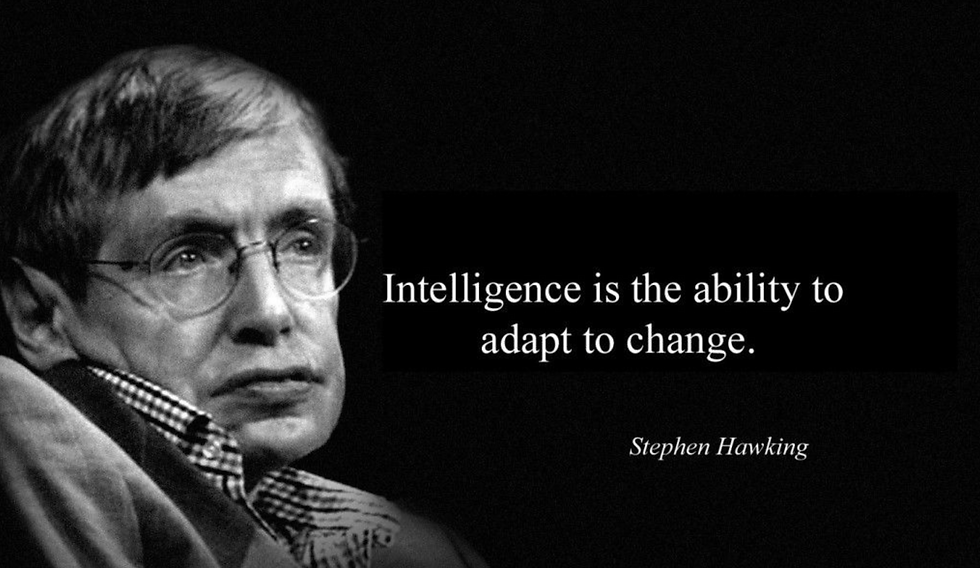
In the same way the emergency department must continuously adapt to change, I believe its leaders must be equally as adaptable. In order to effectively lead and motivate their team within a constantly changing environment, it’s crucial for leaders to be able to adjust how they act based on differing circumstances. This connects not only to the leadership adaptability that I mentioned earlier, but also to another quality that is foundational to the way I lead: I strive to motivate and empower my team members, rather than trying to control every little thing they do. According to Sinek (n.d.), there is a difference between holding the title "leader" and leading:
There are leaders and there are those who lead. Leaders hold a position of power of authority but those who lead inspire us. Whether individuals or organizations, we follow those who lead not because we have to but because we want to. We follow those who lead not for them, but for ourselves. And it’s those who start with why that have the ability to inspire those around them or find others who inspire them. (17:11)
Sinek's words solidify my belief that effective leadership does not come from authority or control. It comes from the ability to inspire people and to foster an environment that makes them want to contribute. My “why” will forever guide me as I dive deeper into healthcare leadership. It will ground me in my desire to not just hold the title of "leader," but to truly lead and inspire people.
Jim Rohn Seminar (2026)
References
Albert , N., & Pappas, S. (2025). Quantum leadership: Creating sustainable value in health care (7th ed.). Jones & Bartlett Learning.
Center for the Study of Healthcare Management. (n.d.). Applying complexity science to health and healthcare. Carlson School of Management, University of Minnesota.
Jim Rohn Seminar. (2026, January 20). Remember why you started / Jim Rohn motivation [Video]. YouTube. https://youtu.be/7h_o6tQjydo
Krasuski, J. (2024, January 16). First most important reason for resolution failure. LifeBrief. https://www.lifebrief.com/first-most-important-reason-for-resolution-failure/
Professor Zigarelli. (2013, August 17). Ten leadership theories in five minutes [Video]. YouTube. https://www.youtube.com/watch?v=XKUPDUDOBVo&t=148s
Sinek, S. (n.d.). How great leaders inspire action [Video].


Comments